Selecting the right digital audio processor is the foundational decision when designing a modern commercial AV ecosystem. As enterprise environments, university campuses, and smart venues demand greater flexibility, the debate between Open Architecture DSP and Fixed Architecture DSP platforms has intensified.
In 2026, the choice is no longer just about budget—it is about software scalability, processing deployment speed, and how efficiently the unit integrates into networked AV infrastructures. Understanding the structural differences between these two processing methodologies determines whether your AV system can adapt to future facility expansions or require a complete hardware replacement.
An Open Architecture DSP (Digital Audio Processor) provides a blank canvas for AV designers. It utilizes a drag-and-drop software interface where integrators can freely position audio processing blocks—such as Acoustic Echo Cancellation (AEC), Automixers, Matrix Routers, and Compressors—and wire them in any configuration. The signal path is entirely user-defined, offering unlimited customizability restricted only by the processor's available DSP horsepower.
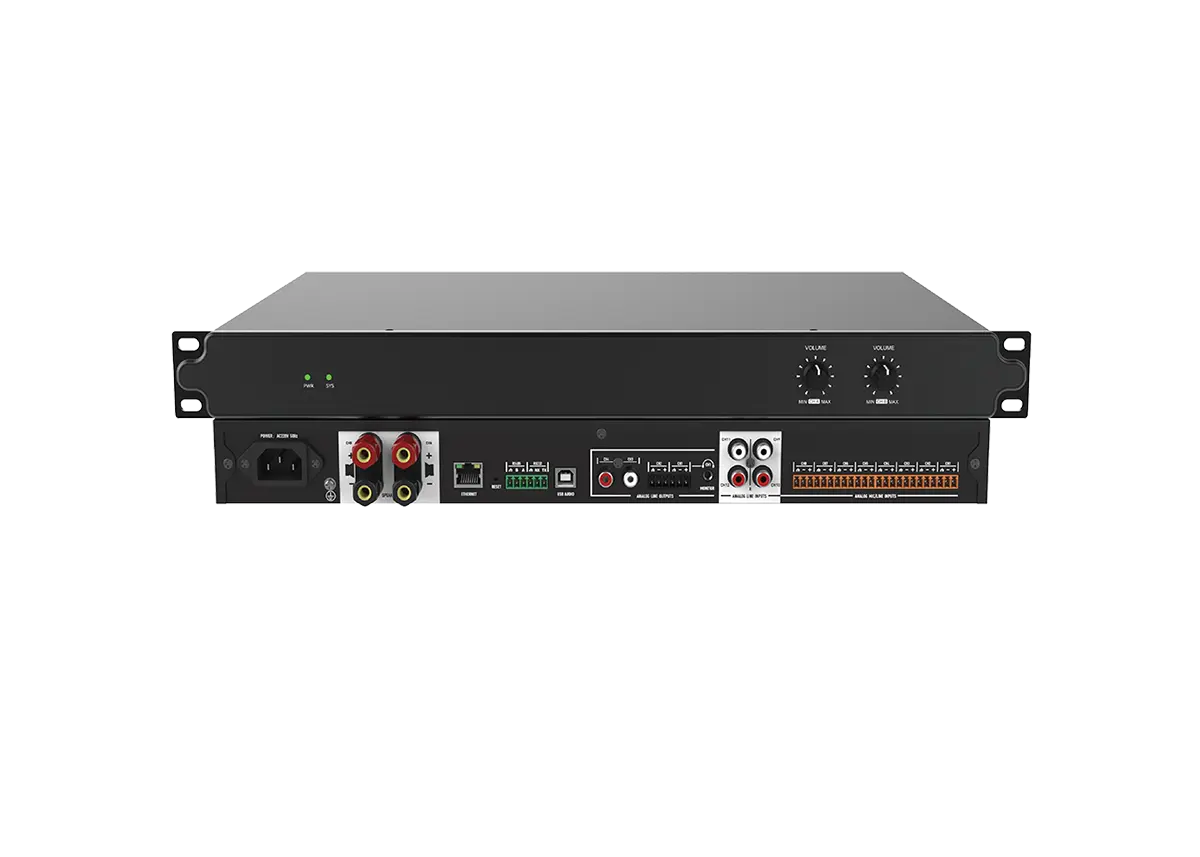
A Fixed Architecture DSP features a predetermined, non-alterable internal signal flow designed by the manufacturer. While the user cannot change the sequence or routing of the internal processing blocks, they have full control over the parameters within those blocks (e.g., adjusting EQ curves, setting gain levels, or toggling gates). These devices are engineered for rapid deployment, high stability, and cost efficiency.
To assist system integrators and IT managers in selecting the ideal AV processing center, this matrix breaks down the core functional trade-offs:
Technical Feature | Open Architecture DSP | Fixed Architecture DSP |
Signal Flow Control | 100% Custom; user-defined routing and layout. | Rigid, predefined signal path and factory layouts. |
Configuration Complexity | High; requires specialized certified programming. | Low to Moderate; turnkey software setup. |
Deployment Velocity | Longer design and testing phase required. | Near-instantaneous; plug-and-play validation. |
DSP Allocation Efficiency | Dynamic; resource allocation depends on layout. | Static; optimized processing assigned per I/O. |
System Scalability | High; easily modified via software updates. | Limited to the original factory hardware constraints. |
Best Used For | Multi-zone complexes, multi-purpose divisible spaces. | Corporate boardrooms, standardized huddle spaces. |
You Manage Divisible Spaces: In multi-purpose convention centers or hotel ballrooms where walls move, an open-platform digital audio processor can dynamically change its internal routing via control system snapshots to match physical room configurations.
Bespoke Audio Logic is Required: If your project requires complex logic controls—such as custom camera-tracking triggers based on microphone gating thresholds—the open-ended workspace allows you to program those specific control blocks.
Future-Proofing is Mandatory: Large institutional facilities choose open platforms because a change in operational needs can be solved by pushing a new software file rather than purchasing new hardware.
Standardization Across Multiple Rooms is the Goal: If you are deploying 50 identical corporate huddle rooms or standard K-12 classrooms, a fixed architecture DSP ensures absolute consistency. It eliminates programming errors and slashes commissioning hours.
Rapid Project Turnaround is Needed: When project timelines are tight, skipping the DSP design phase allows you to focus on physical hardware installation and fast parameter tuning.
The Budget Demands Peak ROI: Fixed systems carry less software overhead and require less engineering time, making them the superior financial choice for high-volume, standard I/O rollouts.
Regardless of the chosen architecture, modern digital audio processors must effortlessly communicate with modern IP setups. High-performance processors usually act as centralized nodes, aggregating audio from specialized endpoints like Dante gooseneck microphones, routing processing internally, and distributing low-latency streams directly to localized network gear or PoE audio amplifiers.
The main difference lies in signal flow control. An Open Architecture DSP allows custom configuration and routing of the internal audio processing blocks via design software. In contrast, a Fixed Architecture DSP uses a locked, manufacturer-defined signal path where only the individual parameters within the blocks can be modified.
No, it is not always better. While an open platform offers unparalleled customizability for complex, multi-zone environments, a fixed architecture DSP is highly preferred for standardized, single-room applications due to its lower cost, immunity to programming errors, and faster commissioning times.
Yes, many premium fixed architecture DSP models feature integrated Dante or AES67 network interfaces. This allows them to receive multi-channel streams from devices like network microphones and send processed signals over Ethernet, despite having a fixed internal processing chain.
Fixed architecture systems are generally easier to maintain because their standardized layouts make troubleshooting predictable for any technician. Open architecture systems offer deeper diagnostic flexibility but require keeping accurate documentation of the custom software design files to ensure successful long-term support.

 English